
How Business Owners Can “Build Their Own Bank” (and Stop Letting Everyone Else Get the Money)
Most business owners don’t have a revenue problem. They have a control problem.
Money comes in, bills go out, inventory gets restocked, equipment needs upgrading, taxes hit, and suddenly the business owner is left asking: “How am I doing this much volume… and still feel tight?”
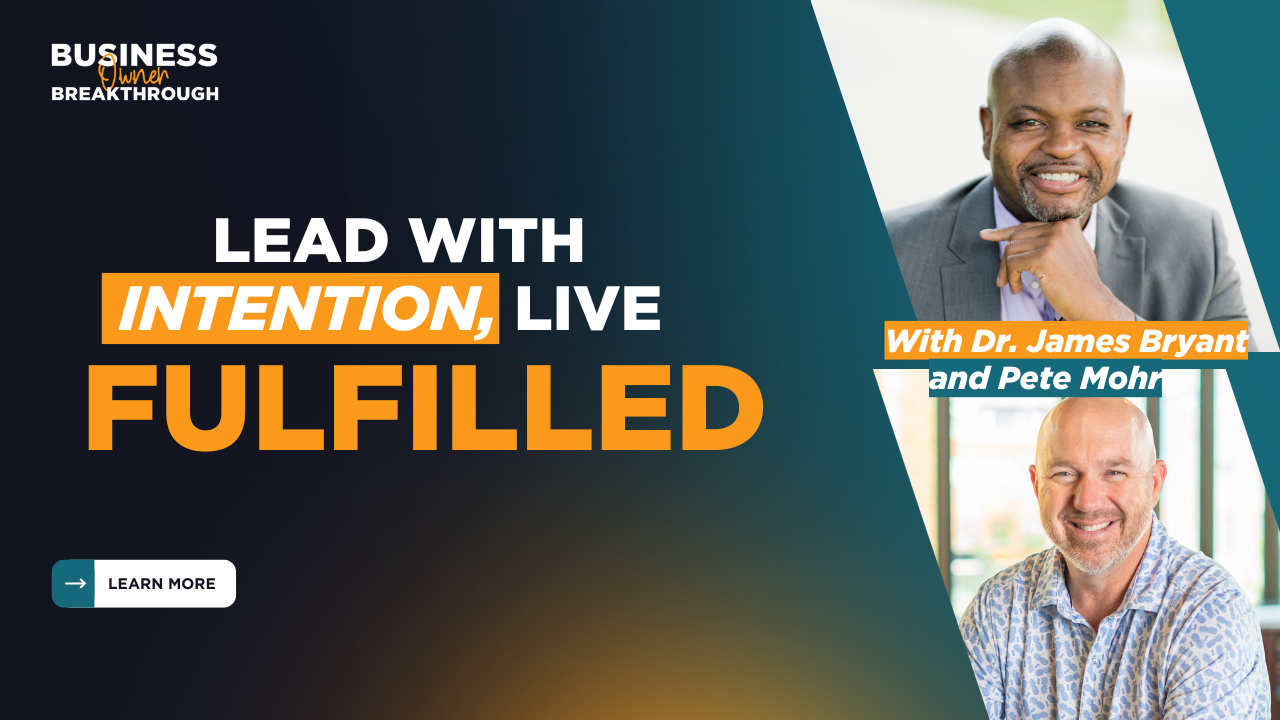
In this episode of Business Owner Breakthrough, Pete Mohr sits down with Richard Canfield of Ascendant Financial to unpack a concept that challenges the default way most entrepreneurs operate: family banking (often called the Infinite Banking Concept). It’s a strategy designed to help business owners create a more stable financial “home base,” access capital on better terms, and build something that supports the business and the family—now and long after the owner is gone.
The real issue: business owners move money… but don’t get to keep it
Richard describes a pattern most entrepreneurs recognize instantly:
- You start hungry and motivated.
- The first years are hard. You reinvest constantly.
- Eventually the business grows, but so do the demands.
- And somehow, everyone else keeps getting your money.
Even when revenue climbs, it can feel like cash is always flowing through you instead of staying with you.
Richard’s point is simple but sharp: for many business owners, the business isn’t the asset yet. You are. And if the business depends on you to run, steer, and stabilize it, then protecting and strengthening the owner becomes a core part of building a business that can actually scale—and eventually exit.
What is “family banking” (and why does it involve insurance)?
At first glance, the idea sounds almost too clean: create a system where you can access capital like a line of credit—but on your terms.
Richard explains that the Infinite Banking Concept centers around using a properly structured type of permanent life insurance as a financial “warehouse.”
Think of it like this:
- Your business and personal life produce constant cash flow.
- Instead of letting that flow leak outward (banks, lenders, taxes, financing companies), you “slice off” a portion and store it in a private asset.
- Over time, that asset becomes a capital reservoir you can borrow against for business needs or personal purchases.
This isn’t about “buying insurance because you should.” Richard frames it as something more practical: risk mitigation + capital control for people who already carry massive risk by owning a business.
The two ways people buy things (and why both have a cost)
Richard outlines a reality that most entrepreneurs ignore because it’s so normalized:
There are only two ways to buy anything:
- Pay cash (and give up everything that cash could have earned if it stayed compounding).
- Finance it (and pay someone else for access to their pile of money).
Family banking introduces a third practical behavior: finance through a system you co-own and control.
The strategy is not “avoid financing.” It’s: stop exporting your financing costs and start redirecting them back into your own machine.
How it works in real life: the “redirect the payment” example
Let’s say your business needs a service van. Traditionally, you finance it through a lender and make monthly payments for years.
Richard’s version keeps the behavior (you still make a monthly payment), but changes the destination:
- You borrow against your policy’s available capital.
- You buy the van.
- Then you repay that loan the same way you would have repaid the bank.
- But instead of paying Ford Credit (or your line of credit), you’re recycling the repayment back into your own system.
Here’s the important part Richard emphasizes: the asset can continue to grow while you’re borrowing against it (depending on the specific policy structure and insurer rules). That’s what makes it feel like a “warehouse” instead of a savings account you drain to zero every time you need cash.
The mindset warning: “no repayment terms” can be dangerous in the wrong hands
One of the most interesting moments in the conversation is Richard’s warning that these loans often have no mandatory repayment schedule.
That sounds amazing… and it is—if you’re disciplined.
But it can also become an excuse to act sloppy with money if you don’t treat it like real financing.
So the system requires two things:
- Education (you need to understand the rules of the road).
- Personal responsibility (you repay like a bank loan because you respect your own system).
In other words: you’re getting better terms, but you don’t get to be careless.
“Hire your best employee”… who never sleeps and never asks for a raise
Richard uses one of the most memorable metaphors in the episode to explain why this works for business owners.
He suggests thinking of the policy like hiring a key employee who:
- Works 24/7
- Never takes vacations
- Never demands benefits
- Never needs a bonus
- Protects your family with tax-advantaged dollars if something happens to you
- Builds a pool of capital you can access without begging a banker who doesn’t understand your business
If someone offered you an employee like that, you’d probably pay to get them on your team.
That’s how Richard reframes the funding question: it’s not “how much premium can you afford?” It’s how much would you invest in an asset that strengthens your business and protects your family simultaneously?
So what does implementation look like for an established business?
Pete asks a question many owners are thinking:
If someone is doing $5M/year and already using a line of credit for inventory or operations, what would switching to something like this actually look like?
Richard’s honest answer: it depends—specifically on how capitalized the owner is and how consistent their profit and cash flow are.
But the general path looks like this:
- Assess cash flow behavior (how much is consistently being saved/allocated today?).
- Structure the policy for flexibility (often a blend of required minimum premiums and optional additional funding).
- Begin borrowing against it for real business needs (equipment, inventory, operations).
- Practice the repayment rhythm (just like you would with a bank).
- Expand the system over time (adding additional policies—Richard compares it to opening new bank branches).
For business owners with uneven cash flow, Richard notes that flexibility matters. Some clients start with lump sums when there’s a strong quarter, then shift to minimum monthly funding when cash is needed elsewhere—while keeping the system alive.
“I don’t have extra cash — it’s all in my business.”
This is where the conversation gets especially relevant for small and mid-sized business owners.
Pete points out a common reality: many owners live comfortably, but don’t have huge personal savings because their wealth is tied up in the business.
Richard’s response is important: the system helps owners understand the difference between:
- cash flow (money moving)
- liquidity (money ready)
- a war chest (capital that creates stability)
Many owners reinvest quickly because they see opportunities. Family banking is about creating a stable “warehouse” so the owner isn’t always forced to choose between growth and safety.
A practical example: using the system to pay taxes
Richard shares his own example: he created a “tax policy” funded annually, then borrowed against it to pay taxes—repaying the loan over time instead of draining cash reserves.
What this creates is a powerful rhythm:
- fund the system
- borrow against it for predictable costs (like taxes)
- repay it steadily
- repeat—while the “machine” grows more capable each year
Richard compares it to buying a machine for a manufacturing floor. If you had a machine that got more efficient over time and had very little downtime, you’d want more of them working for you.
What happens when you sell the business?
Pete asks the exit-planning question: if this system is built inside a holding company (Holdco), what happens after the business sells?
Richard outlines a few common outcomes:
- Replace the outstanding policy loan using sale proceeds (restoring equity and strengthening liquidity).
- Keep the policy as “home base”—the central reservoir your money returns to and deploys from.
- Use it to fund the next phase (investments, real estate, supporting children, new ventures, or creating income streams depending on life stage).
The key principle stays the same: money has a “home,” and you build the habit of deploying and returning capital to your own system instead of exporting it outward.
Important note: this isn’t one-size-fits-all (and risk tolerance matters)
Richard also calls out that strategy decisions depend on the owner’s appetite for complexity and scrutiny, especially regarding tax planning and how tightly personal and corporate structures are blended.
Just because something is possible doesn’t mean it’s the best fit for your specific risk tolerance, accounting support, and exit timeline.
This is why Richard emphasizes coaching and education—similar to how business owners hire specialists for operations, leadership, and exit planning.
Big takeaway: business ownership should lead to a better life
Pete closes the episode with a statement many owners need to hear:
You got into business to have a better life.
And whether you like it or not, that better life requires having the money—and the mechanisms—to support the life you want for yourself and your family.
Family banking isn’t presented as the only mechanism. But in this conversation, it’s positioned as a powerful one—especially for owners who are tired of being profitable on paper but feeling financially exposed in real life.
Want to learn more?
Richard shares a free resource for listeners: his book “Don’t Spread the Wealth”, which includes a guide and additional bonus content.
Get the book: dontspreadwealth.com
You can also find Richard and his content on the Wealth On Main Street podcast and YouTube channel, where he shares real-world stories from business owners implementing these concepts.


0 Comments