
Running a footwear store today is more complex than ever. Between managing inventory, juggling suppliers, keeping up with marketing, and serving customers in-store and online, the workload can feel endless.
The good news? You don’t have to do it all manually anymore. With the right tools and automation in place, independent retailers are freeing up hours every week, saving money, and even scaling to multi-million-dollar sales — often with lean teams of just a few people.
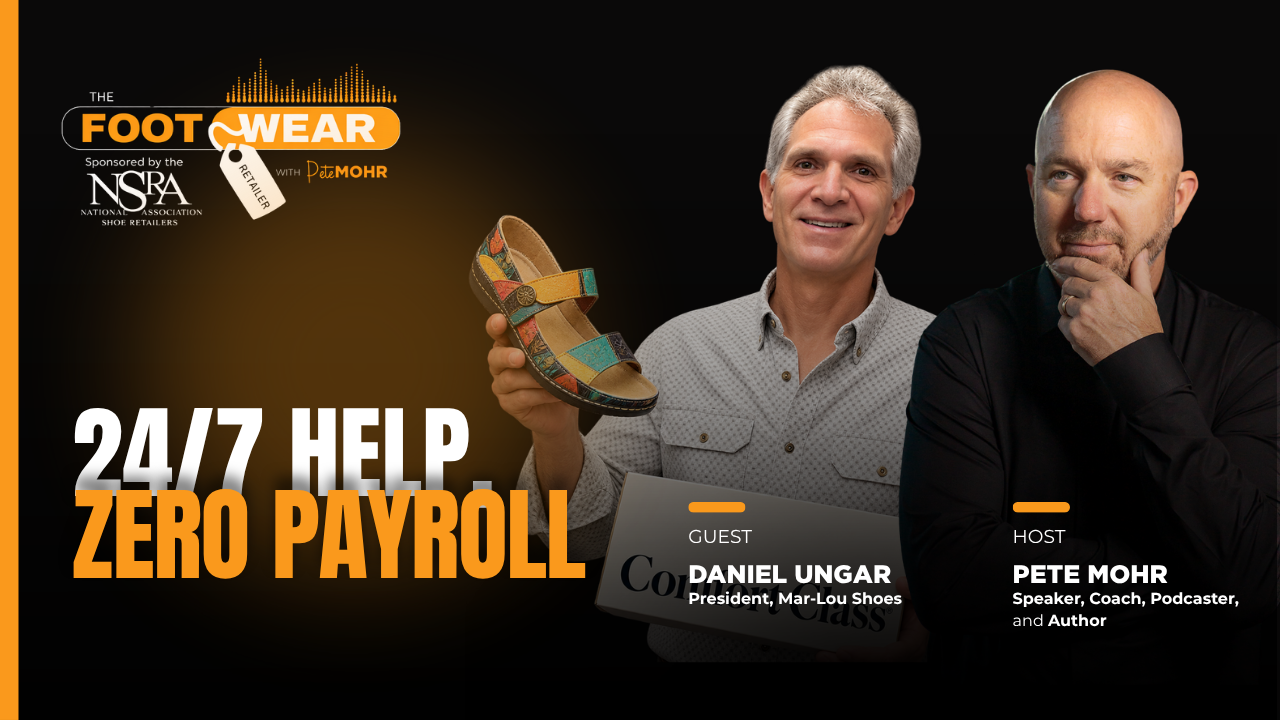
That’s exactly what Pete Mohr sat down to discuss with Daniel Tadros of 360 Retail Management on The Footwear Retailer Podcast. Let’s dive into the key lessons that can help your store work smarter, not harder.
Why Retailers Can’t Afford to Ignore Change
Change is scary. Many store owners worry that upgrading systems or introducing automation will be overwhelming. But as Daniel explained, the bigger risk is doing nothing.
- Money left on the table: Without proper systems, you’re almost guaranteed to lose out on profit opportunities.
- Customer expectations are rising: Shoppers are used to fast, personalized service. If your competitors deliver that and you don’t, customers will notice.
- ROI is undeniable: Unlike traditional investments that might take years to pay back, automation tools can deliver returns in weeks.
In short: the longer you wait, the harder it becomes to catch up.
The Low-Hanging Fruit: Where to Start With Automation
Not sure where to begin? Daniel recommends focusing on these quick wins first:
- Set up your POS correctly. Many retailers never fully configure their point-of-sale system. Start by integrating your POS with suppliers and marketplaces so inventory updates automatically instead of relying on hours of manual entry.
- Automate product listings. Don’t waste time copy-pasting images, descriptions, and tags. Use automation to push enriched product data (sizes, materials, images, etc.) directly into your online store and sales channels like Instagram or TikTok shops.
- Optimize for search. Well-structured product data — including tags, SKUs, and vendor codes — helps Google and shopping platforms display your products over competitors.
- Use AI to handle repetitive tasks. From customer service (e.g., “Where’s my refund?”) to dynamic pricing and clearance sales, AI can save hours of work while boosting accuracy.
The Last 10%: Why Human Oversight Still Matters
Automation is powerful, but it isn’t perfect. Pricing rules, MAP compliance, and small details still require human oversight. That’s why Daniel emphasizes the “human in the loop” model — letting AI handle 80–90% of the work while experienced staff ensure accuracy.
The result? Retailers save massive amounts of time without losing control.
Streamlining In-Store Operations
Automation isn’t just about e-commerce. Brick-and-mortar retailers can save hours every week by:
- Automating invoice and purchase order entry, customized by location and reporting needs.
- Standardizing product images and descriptions so your online and in-store experience match.
- Tracking SKU-level margins instantly instead of relying on manual spreadsheets.
For footwear specifically, this is a game changer. Twice a year, stores need to enter thousands of new products for spring/summer and fall/winter seasons. With automation, this no longer means taking sales staff off the floor to sit behind a computer.
Outsourcing Without Losing Control
Many retailers hesitate to outsource because they fear losing control. But modern outsourcing looks very different:
- Transparent tracking: Every minute of work is logged and reported.
- Retail expertise: Specialized partners who know your industry can see problems before they happen.
- Flexibility: You can ramp support up or down depending on the season.
Done right, outsourcing doesn’t replace your team — it gives them time back to focus on customers.
Marketing, Websites, and Beyond
Automation also extends into your marketing. By analyzing KPIs like bounce rates and conversion rates, you can see what’s working and what’s costing you money. Tools and strategies that track results ensure that your marketing dollars translate into real sales, not just website traffic.
Everything should tie back to three outcomes:
- Increased sales
- Better cashflow
- Saved time
If it’s not driving one of those, it’s not worth it.
Building Long-Term Value in Your Business
Whether you plan to sell your store one day or simply want to grow, automation builds business value. Clean systems, accurate data, and efficient processes make your store more attractive to buyers, lenders, and even future partners.
As Pete shared, most owners know the balance of their stock portfolio but have no idea what their business is worth. By adopting these systems now, you make your business more valuable — not just more profitable.
The Bottom Line: Get On the Train Now
Automation isn’t just a nice-to-have anymore. It’s quickly becoming the standard. The retailers adopting these tools today are already pulling ahead — some generating millions in sales with lean teams.
If you wait too long, you’ll be trying to catch up to competitors who have already set higher expectations for customers. As Daniel put it: “The train is moving, and it’s only getting faster.”
Now’s the time to explore automation, even in small steps. The payoff in saved time, increased profits, and long-term business value is well worth it.
👉 Want help figuring out where to start? Reach out to Daniel and the team at 360 Retail Management for a free audit and see exactly where you can save time and make more money.

0 Comments